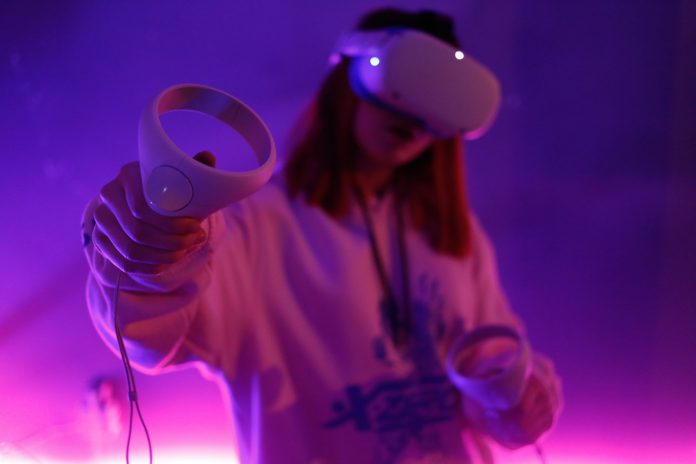
Virtual reality has revolutionized how we interact with digital worlds, and nowhere is this more apparent than in adult simulations. These experiences offer a level of immersion that was once the stuff of science fiction. Central to this immersion are motion controls, the hardware that translates your real-world movements into virtual actions. Mastering them is the key to unlocking a truly personal and believable experience.
This guide will walk you through everything you need to know about using motion controls in VR adult simulations. We’ll cover the different types of controllers available, how to set them up for optimal performance, and advanced techniques to make your virtual interactions feel as natural as possible. By the end, you’ll have the knowledge to move beyond simple button presses and truly connect with your virtual partners.
The goal is to bridge the gap between player and avatar, making the digital world feel tangible. Understanding how to effectively use your motion controllers is the first and most important step on that journey. Let’s explore how to get the most out of your hardware and elevate your VR experience from passive viewing to active participation.
What Are VR Motion Controls?
VR motion controls are handheld devices that track the position and orientation of your hands in three-dimensional space. Unlike traditional gamepads, which rely on joysticks and buttons, motion controllers allow you to reach out, grab, touch, and interact with the virtual environment in a direct and intuitive way.
These controllers are typically equipped with an array of sensors, including accelerometers and gyroscopes, which monitor their movement. This data is then sent to the VR headset and computer, which reconstruct your hand movements within the simulation. This process, known as 6-degrees-of-freedom (6DoF) tracking, allows the system to know exactly where your hands are and how they are oriented—up/down, left/right, forward/backward, plus pitch, yaw, and roll.
In the context of adult VR, this technology is transformative. It allows for nuanced interactions that are crucial for creating a sense of intimacy and connection. Instead of selecting a pre-programmed animation from a menu, you can physically reach out and touch your virtual partner, with your avatar’s hands mirroring your every gesture. This direct control is what makes the experience feel present and believable.
Common Motion Controller Types
The VR hardware market offers a range of motion controllers, each with its own design philosophy and capabilities. While they all serve the same fundamental purpose, the differences in their features can significantly impact your experience.
Standard Handheld Controllers
These are the most common type of motion controllers and are included with popular VR headsets.
- Meta Quest Controllers (Touch Controllers): Used with the Meta Quest 2, 3, and Pro, these controllers are known for their ergonomic design and reliable tracking. They feature a traditional layout with analog sticks, face buttons (A, B, X, Y), and grip/trigger buttons. The standout feature is their capacitive sensing, which can detect whether your thumb, index, and middle fingers are touching the controller or lifted. This allows for basic hand gestures like pointing or giving a thumbs-up, adding a layer of non-verbal communication.
- Valve Index Controllers (Knuckles): Regarded by many as the gold standard for immersion, the Index controllers go a step further. They feature an innovative strap that secures the controller to your hand, allowing you to completely let go without dropping it. More importantly, they offer per-finger tracking for all five fingers. This is achieved through 87 sensors that track the position and pressure of each finger, enabling highly realistic hand poses and gestures. For adult simulations, this means you can caress, hold, and interact with a level of fidelity that other controllers can’t match.
- PlayStation VR2 Sense Controllers: Designed for the PSVR2, these controllers feature a unique “orb” design that enhances ergonomics and tracking. They incorporate advanced haptics and adaptive triggers, which can provide variable resistance to simulate the feeling of gripping different objects. While the PSVR2 ecosystem is more closed, these controllers provide a highly immersive experience for the simulations available on the platform.
Haptic Gloves and Suits
For those seeking the ultimate level of immersion, haptic feedback devices take motion control to the next level by adding the sense of touch.
- Haptic Gloves: Devices like the HaptX Gloves or SenseGlove are advanced peripherals designed for enterprise and prosumer use. They not only track your finger movements with high precision but also use a system of actuators or microfluidics to provide tactile feedback. This means you can “feel” the shape, texture, and resistance of virtual objects. In an adult simulation, this could translate to feeling the contours of your partner’s body.
- Haptic Suits: Full-body suits, such as those from bHaptics (TactSuit), feature multiple haptic motors distributed across the chest, back, and arms. When integrated with a VR simulation, these suits can provide feedback corresponding to in-game actions. For example, you might feel a partner’s touch on your back or a gentle embrace. When combined with motion-controlled hands, a haptic suit creates a powerful, full-body sense of presence.
While haptic gloves and suits offer unparalleled immersion, they are currently expensive and supported by a more limited range of software. However, as the technology matures, they represent the future of interactive VR.
Setting Up Your Controls for an Adult Experience
Proper setup is crucial for a seamless and immersive experience. Taking a few minutes to calibrate your hardware and in-game settings will pay dividends by preventing frustrating technical issues from breaking the sense of presence.
Physical Setup and Calibration
- Clear Your Playspace: Ensure you have enough physical space to move your arms freely without hitting walls or furniture. A minimum of a 6×6 foot area is recommended for room-scale VR.
- Check Your Tracking: Make sure your headset’s tracking cameras or external base stations have a clear, unobstructed view of your controllers. Dim lighting, reflective surfaces (like mirrors or glossy TVs), and even bright sunlight can interfere with tracking. If you experience your virtual hands floating away or stuttering, poor tracking is the likely culprit.
- Secure Your Controllers: Use the included wrist straps. In a moment of passion or surprise, it’s easy to lose your grip. The straps on Valve Index controllers are particularly important, as they are essential for enabling open-hand gestures.
- Run Calibration: Most VR systems have a calibration process. This includes setting your floor height and drawing your play boundary (the Guardian on Quest, Chaperone on SteamVR). It’s important to redo this if you change your play area to ensure the virtual world aligns correctly with your physical space.
In-Game Controller Settings
Most modern adult VR simulations offer a range of settings to customize your control experience.
- Hand Posing and Gestures: Explore the gesture settings. Many games allow you to map different hand poses (fist, open palm, pointing) to various button combinations or controller states. If you’re using Valve Index controllers, the game will likely support dynamic finger tracking automatically. Spend some time in a neutral environment within the game just practicing making different hand shapes to see how your avatar responds.
- Interaction and Grip Settings: Look for options related to how you grab and hold objects (or partners). Some games use a “toggle” grip, where you press the grip button once to hold on and again to let go. Others use a “hold” grip, requiring you to continuously squeeze the button. The “hold” method is often more realistic but can be fatiguing. Choose the one that feels most natural to you.
- Haptic Feedback Strength: If your controllers or haptic suit support it, you’ll likely find a slider to adjust the intensity of the vibrations. A subtle haptic buzz can enhance the feeling of touch, but overly strong feedback can feel artificial and distracting. Experiment to find a level that adds to the immersion without pulling you out of the experience.
Mastering Movement and Interaction
With your hardware set up, it’s time to focus on technique. The goal is to move in a way that feels natural and translates effectively into the virtual world, fostering a deeper connection with your virtual partner.
The Importance of Slow, Deliberate Movements
A common mistake for newcomers to VR is moving too quickly and erratically. VR tracking is excellent, but it’s not perfect. Fast, jerky motions can sometimes result in tracking glitches or movements that appear unnatural on your avatar.
In the context of an intimate simulation, slow, deliberate movements are not only more reliable from a technical standpoint but are also more sensual and realistic.
- Reach Out Slowly: When you go to touch your virtual partner, do so with a slow and gentle motion. This gives you time to see how your virtual hand is moving and adjust your trajectory.
- Practice Caressing: Use open-hand gestures (if your controllers support them) to gently trace the contours of your partner’s arm, face, or body. Pay attention to the haptic feedback, if available, which can simulate the sensation of touch.
- Observe and React: Watch how your partner responds to your touch. Well-designed simulations feature characters that react realistically to your actions. Their verbal and non-verbal cues are your guide. If they lean into your touch, you know you’re doing it right. If they seem unresponsive, try a different approach or a different area.
Combining Gestures with Action
Your hands are powerful tools for communication. Use them to express intent and emotion beyond simple physical contact.
- Beckoning and Pointing: Use a simple pointing or “come here” gesture to guide your partner. This is far more immersive than clicking a UI button to initiate an action.
- Holding Hands: One of the simplest yet most powerful interactions in VR is holding hands. It creates a direct point of connection. With good controllers, you can gently squeeze your partner’s hand and feel a haptic response, reinforcing the bond.
- Head and Hair: Gently cupping a partner’s face or running your fingers through their hair (if the simulation’s physics support it) are incredibly intimate gestures made possible by per-finger tracking on controllers like the Valve Index.
Overcoming Common Challenges
- “Claw Hands”: This is a common issue where the in-game hand model defaults to a semi-closed or “claw-like” position. It’s often caused by the game not properly reading the capacitive sensors on controllers like the Meta Quest’s. Try lifting all your fingers completely off the controller buttons and then resting them back down to reset the tracking.
- Passing Through Objects (and People): It can be immersion-breaking when your hand passes straight through your partner. While this is ultimately a limitation of the software, you can mitigate it by moving slowly and stopping your physical motion as soon as your virtual hand makes contact. Some advanced simulations have “soft body physics” that offer resistance, making this feel more natural.
- Controller Fatigue: Holding controllers for an extended session can be tiring, especially if the game requires you to constantly hold down grip buttons. Take breaks, and don’t be afraid to use “toggle” grip settings if available. The strap system on the Valve Index controllers is a huge benefit here, as it allows your hand to remain relaxed.
Take the Next Step in Immersion
Mastering motion controls is the gateway to unlocking the full potential of adult VR simulations. It transforms the experience from something you watch to something you actively participate in. By understanding your hardware, optimizing your settings, and practicing deliberate, natural movements, you can create a profound sense of connection and presence.
The technology is constantly evolving. What requires high-end, expensive peripherals today may be standard in consumer headsets tomorrow. The key is to engage with the tools you have, learn their nuances, and push the boundaries of what they can do.
Your virtual relationships are waiting. Pick up your controllers, step into the simulation, and start exploring a new world of digital intimacy.